Carbon Arts

CARBON ARTS | creative solutions for a changing climate find us on: facebook

Recent Events

1 December: Edible Cocktail Party

By

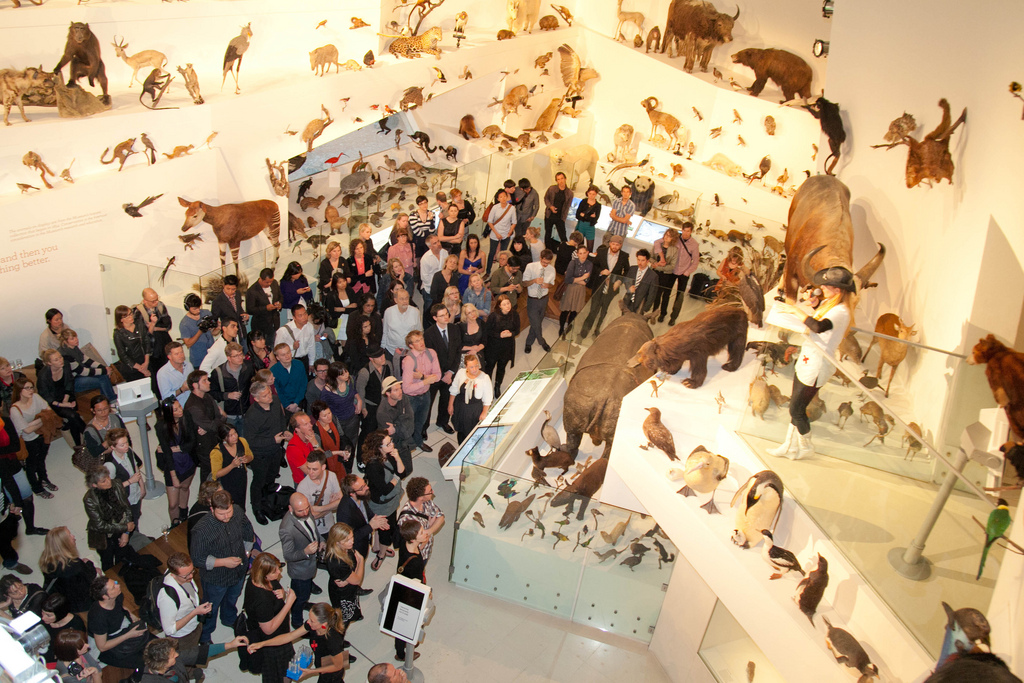
Nourish your vision for a sustainable future with an adventurous travelling cocktail party around the Melbourne Museum with artist Natalie Jeremijenko and chef Mihir Desai.

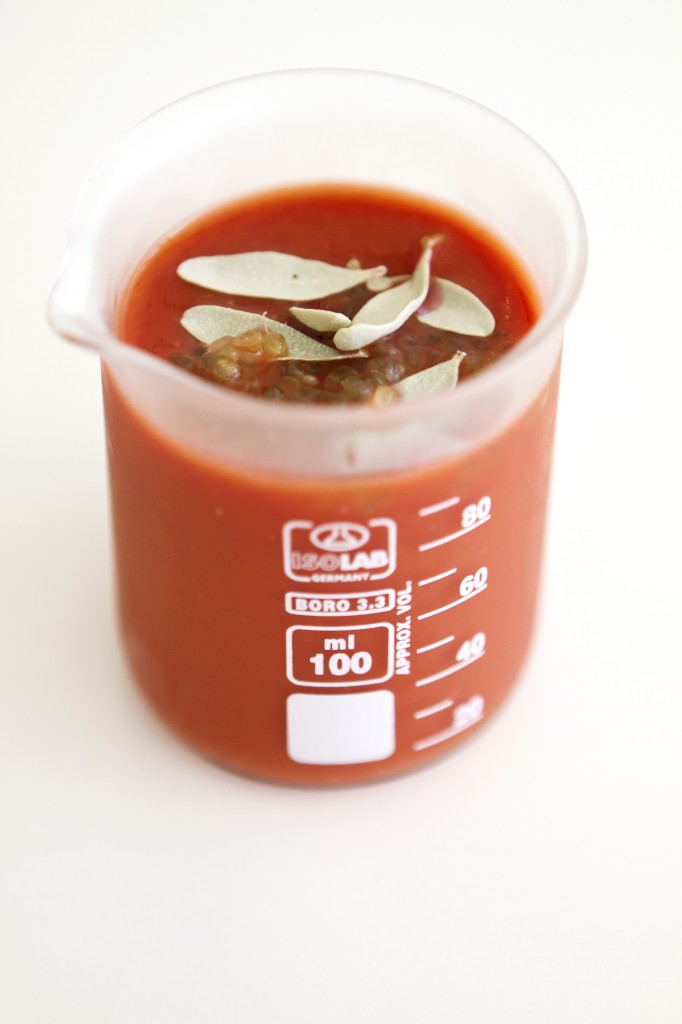
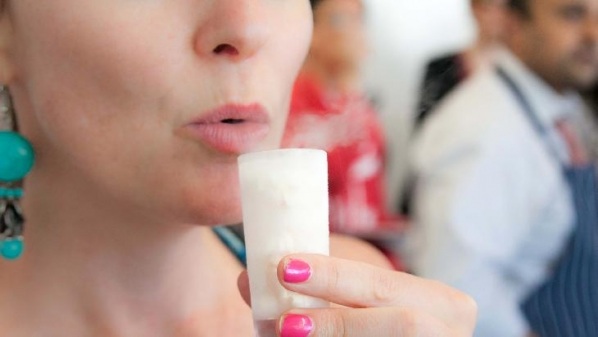
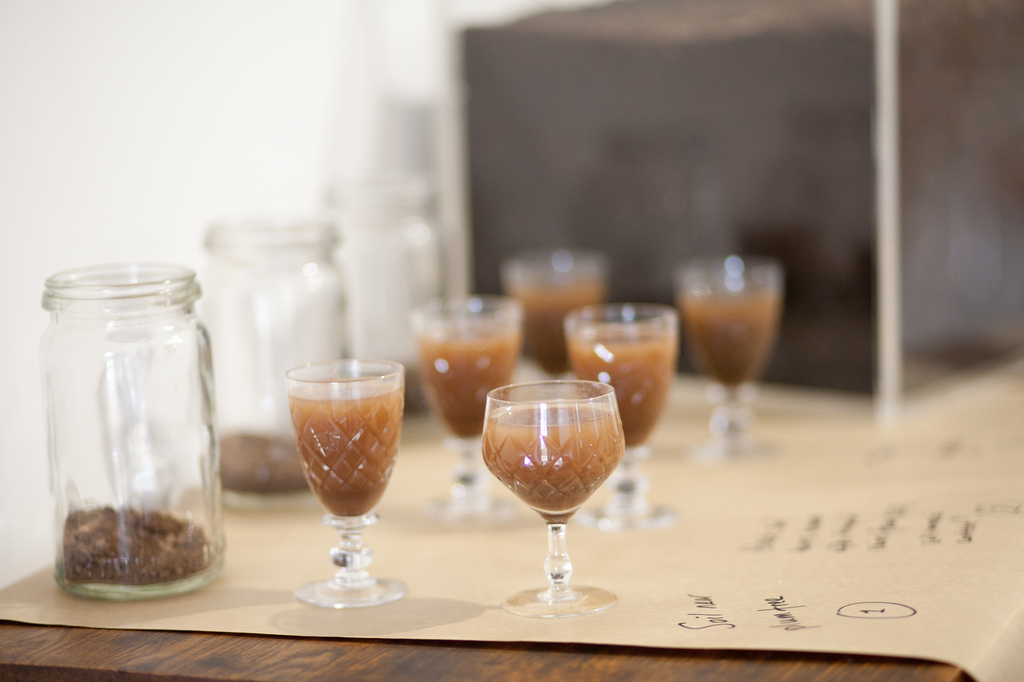
Mixing together art performance, science and modern cuisine, this one-night-only event will treat guests to three delicious, edible cocktails that each stylishly and humorously explore our gastronomic, economic and material interdependency on other creatures.

Discover the museum at night and a whole new perspective on food futures with the Cross Species Adventure Club.

Thursday 1 December 2011
6.00 – 8.00 PM Cocktails + Performance | Food + Drink available 8.00 – 9.00 PM
Melbourne Museum I
11 Nicholson St, Carlton VIC 3053
$45 Full Price | $35 for Museum Members
Tickets can be booked online by clicking here

30 November: xSpecies Dinner Party

By


DROUGHT AND FLOODING RAINS: THE DINNER

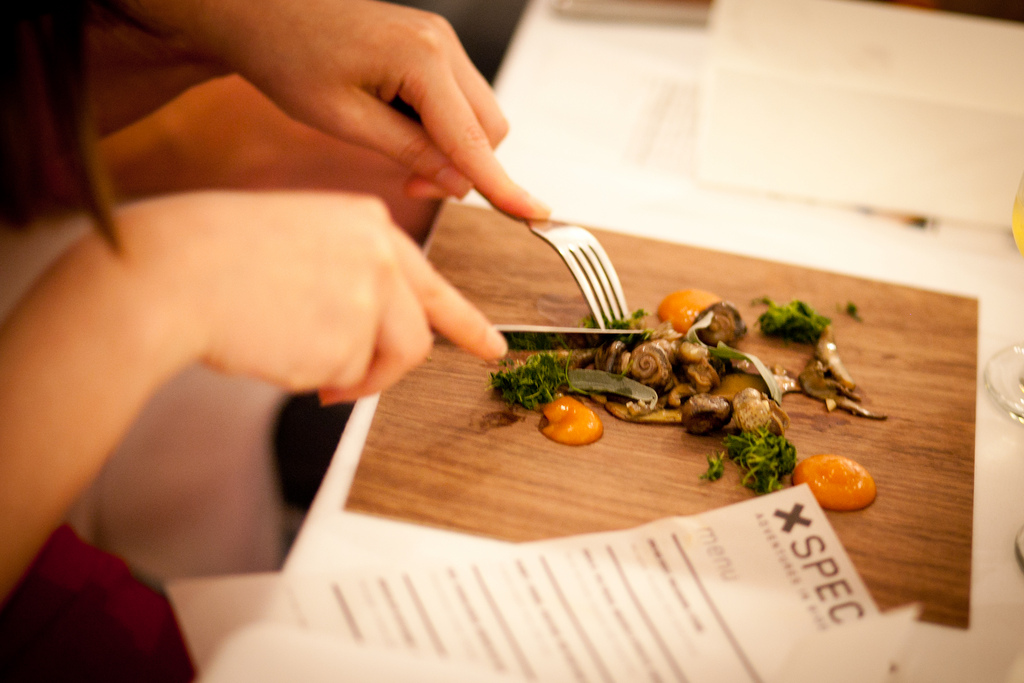
Artist Natalie Jeremijenko and chefs Mihir Desai and Pierre Roelofs create a sensory experience of edible artworks from a fragile land(scape).

Running for over a year in New York and Boston, the celebrated Cross(x)Species Adventure Club Supper Club, comes to Australia for the first time. Five+ paired courses will be served to adventurous palates exploring the unique properties of Australian ecology through modern cuisine techniques and inspired ingredients.

Wednesday 30 November 2011
7:00 – 9:30 PM
Arc One Gallery, 45 Flinders Lane, Melbourne VIC 3000
$140 I Limited seats available


28 November: Forum with Natalie Jeremijenko

By

FORUM: Climate Change, Culture + Cuisine

The future of sustainable food lies in a complete rethink of how humans relate to the natural environment through collective engagement and cultural innovation.

Carbon Arts and Arena Project Space invite you  engage with New York based artist/engineer/activist Prof Natalie Jeremijenko, chef Mihir Desai and guest speakers to explore how we can use the creative potential of science, modernist cuisine and the imagination to connect food production to healthy ecologies.

Monday 28 November 2011
6.00 – 7.30 PM
Arena Project Space I 2 Kerr St Fitzroy, VIC, 3065
$10 Pay at the door I Drinks by donation

26 November: SOIRÉE OF EARTHLY DELIGHTS

By

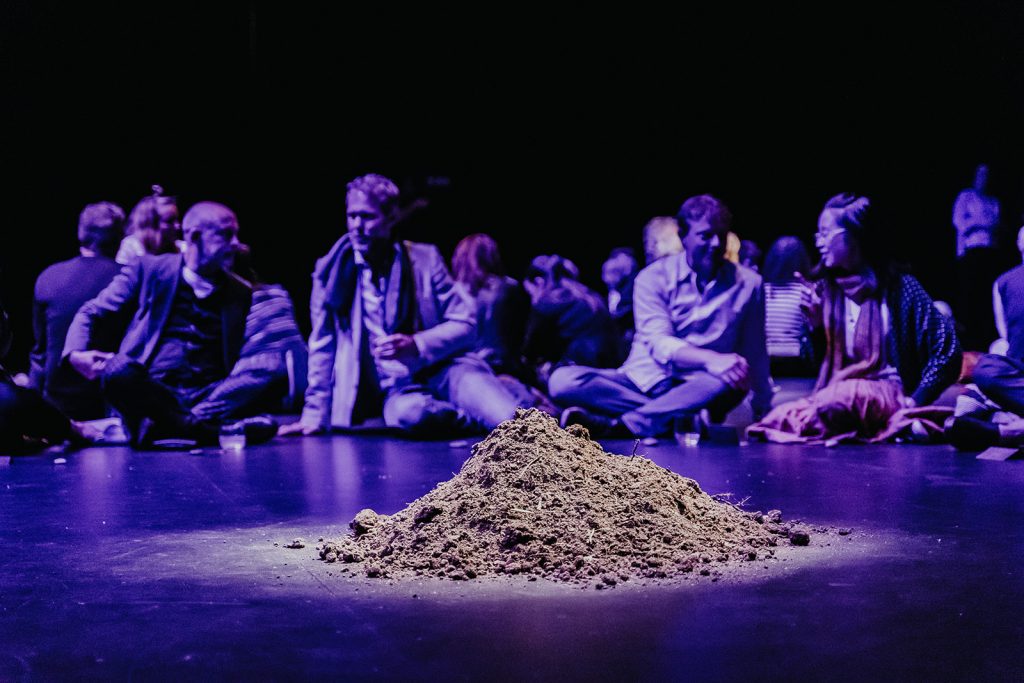
SOIREE OF EARTHLY DELIGHTS: Exploring the magic life of soils with Cocktails + Desserts

Pack your bags, we are off for a trip to Avoca, in country Victoria, to meet local experts and agricultural producers to explore our relationship to soils, top and bottom.

Put your feet in the earth, turn your eyes to the stars, and relax while enjoying a rich serving of after dinner treats designed to bring a whole new awareness to terroire and terra firma.

Carbon Arts is pleased to be collaborating with The Avoca Project (TAP) for this event. TAP is the initiative of established Australian artist, Lyndal Jones. The European house provides a home to exhibitions, symposia, projects and events that draw community attention to the historical causes and effects of climate change.

Saturday 26 November 2011
From 8.00 – 9.30 PM (onwards)
The Avoca Project
I 16 Dundas St, Avoca, VIC, 3467 (2 hrs drive from Melb)
$35 – Dress Adventurous
Click here to book

CROSS(X) SPECIES ADVENTURE CLUB COMES TO AUSTRALIA

By

Carbon Arts and artist Natalie Jeremijenko’s xClinic are colliding with force in November and December 2011 in a mash-up of arts, science, food and sustainability to deliver a series of exciting events under the banner of the Cross(x) Species Adventure Club.

Become an uFarmer at our AgBag workshop in Sydney, taste a biodiverse future with edible cocktails that are delicious to humans and non-humans, or take a trek to the Victorian countryside for a weekend of feral food foraging.

Book here for all events, by selecting from the listings to the left.

Download our full program here : xspecies program of events

21 November: AgBag Workshop Sydney

By

Jeremijenko's xClinic and Farmacy


Become a uFarmer! Learn how to create arable land out of thin air

Receive your very own Jeremijenko-designed durable, efficient AgBag, and learn how to fill it with uFoods that equip an urban body to cope with the assault of urban pollutants.

We will step you through the whys and wherefores of closed system agriculture, and how a distributed urban system can produce high value edibles.

We will add a phenological tracking system to your stylish AgBag so that you can become part of a collective experiment in urban farming.

Monday 21 November 2011
2.00 – 5.00 PM

Customs House, Sydney
A NIEA Curating Cities event
$55 | includes workshop and take-home, personalised AgBag
Click here to book.


22 November: CURATING CITIES CONFERENCE

By

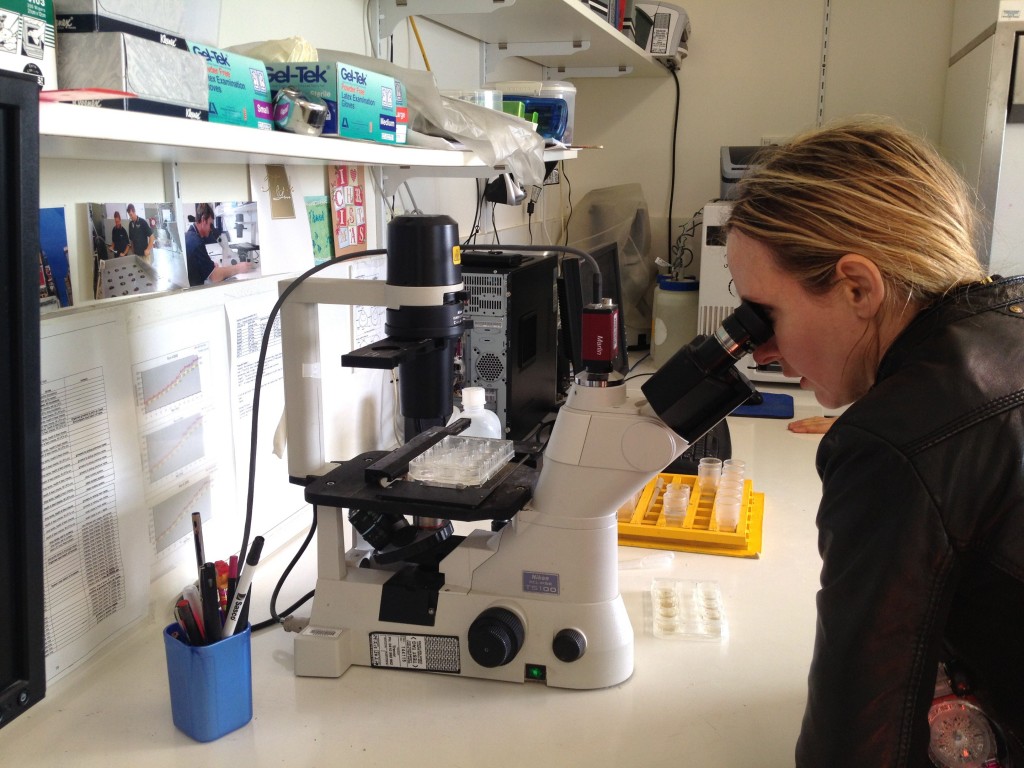
Cross(x)Species Adventure Club Cocktails. Natalie Jeremijenko. Photo credit: Emilie Baltz

NIEA’S CURATING CITIES CONFERENCE: SYDNEY > COPENHAGEN

What is the role of public art in urban ecology and how do the tactical interventions and guerilla actions of artists extend, augment or counter the master plans of visionary architects and urban designers? This is one question posed by the exhibition and conference Curating Cities: Sydney-Copenhagen curated by the National Institute of Experimental Art. Carbon Arts will be exploring the theme of urban food sustainability with a panel session, the xClinic’s Farmacy AgBag installation and Cross(x)Species edible cocktails for the conference close.

Conference: 22 November 2011, 9am – 6.30pm
Exhibition: 17 Nov – 18 Dec
Customs House, 31 Alfred Street, Circular Quay NSW 2000
$69 conference fee
Click here to book and for more information

2 December: Ice cream Workshop

By
What will our 21st century ice-cream future be?  

Uncover the complex science and ecology of ice cream. Join the xSpecies Adventure Club in making and comparing ice cream three ways for taste, texture and composition: through a traditional slow churn, a liquid nitrogen-enabled ‘flash freeze’ and an ultra-modern molecule-thin pacojet shear.

We will also explore alternative milk producing species, including the buffalo, and their impacts on the environment.


Friday 2 December 2011

3.00 – 5.00 PM

William Angliss Institute, 555 La Trobe St, VIC 3000 (Meet at reception)
$35 Full Price/$25 Students + Staff
Click here to book

Interview with Natalie Jeremijenko

By

Natalie Jeremijenko at a Cross Species Adventure Club event in New York

Our agency is powerful: environmental art activist creates future foods for humans and the planet

This interview was written for Arena Magazine No 114: http://www.arena.com/by Roger Nelson.
Roger is a writer and curator, and founding Director of No No Gallery in North Melbourne.

‘Reducing the carbon footprint and reducing the food miles and reducing the negative effects is important and I think necessary. But it’s not sufficient.  It’s radically insufficient.’ Natalie Jeremijenko’s art practice centres on utilising the creative potential of science and of the imagination to find solutions to the problems of environmental degradation.  In recent years, her work has been increasingly focused on food production.  Through her ongoing Cross(x)Species Adventure Club project (which will visit Melbourne for the second time this December in collaboration with Carbon Arts), Jeremijenko combines rigorous research, radical politics and rich imagery to propose that the future of sustainable food lies in a complete rethink of how humans relate to the natural environment.  She employs highly specialised technologies yet insists on the importance of collective engagement to create what she poetically terms ‘shared public memories of possible futures.’  Hers is a creative practice that engages with artistic and political concerns in a way that renders them both inextricable and irresistible.

Jeremijenko, who has qualifications as well as scholarly publications in fine art, biochemistry, physics, neuroscience and precision engineering, prefers to call herself an ‘environmental art activist.’  A dazzlingly prolific and articulate multi-tasker, Jeremijenko spoke by telephone with Arena Magazine while riding a bike through dense New York City traffic carrying water samples from the Bronx and Mississippi Rivers, balancing two computers in a basket, and toting a bag full of electrical cables – all the while wearing a cowboy hat to keep the sun out of her eyes. She has been known to hold office consultations on a raft constructed out of recycled plastic bottles floating on New York’s East River, yet she is also a past recipient of the prestigious Rockefeller Fellowship: Jeremijenko navigates between eccentricity and the establishment with ease and charm.

She has exhibited at several high-profile US museums, including the Whitney, but the primary focus of Jeremijenko’s practice is public and participatory.  Past projects have included Feral Robotic Dogs (2003), for which the artist rewired off-the-shelf children’s toys, equipping them with complex toxin-detecting and communication software and ‘releasing’ them in a range of contexts including within public art museums.  As is typical of what is often called ‘new media’ art, the object (the rewired robots) and the performance (their release in public) are both integral to the work: that is, the project only becomes fully meaningful with the active involvement of a public audience.  That Feral Robotic Dogs was reported in specialist science and art journals as well as in The New York Times is testament to Jeremijenko’s success in harnessing the communicative potential of art to capture public attention to a degree to which an academic experiment would never aspire.

‘There’s a lot of accounting and measuring of the negative effects,’ Jeremijenko explains, but she recognises that diagnosing the problem is only the beginning.  The Feral Robotic Dogs ‘sniffed’ out toxins, but the edible cocktails and amuse-bouches Jeremijenko is currently working on actually seek to make a positive contribution to the health both of the human consumers and the natural environment.  The artist has been holding regular events under the moniker of the Cross(x)Species Adventure Club, intimate public gatherings that combine elements of an art performance, a science lecture and a cocktail party.  This December’s instalment in Melbourne will interact with the exhibits collected in the Melbourne Museum.  Jeremijenko believes that ‘the food movement is a huge movement – in the US it’s the biggest social movement by a long way.  There are a lot of people interested and engaged.’ Her project strives to contribute a positive and playful spirit to this movement, to seek possibilities rather than solely cataloguing problems.

‘The Cross(x)Species Adventure Club is creating a convivial context in which we can think about the extraordinary challenge of redesigning and reimagining food systems,’ Jeremijenko says.  Her ambition is to ‘design food systems so that they improve environmental health, so they augment biodiversity, so they actually have positive effects.  This is a huge design challenge and there aren’t actually people working on that…[asking] “how the hell do we do this so that it radically improves environmental health and biodiversity.”’  What makes the club ‘cross species’ is the aim that everything on the menu offers positive nutrition both for humans and other creatures: one dinner consisted wholly of foods edible – and delicious – to both humans and geese.  Past offerings concocted by Jeremijenko in collaboration with molecular gastronomer Mihir Desai have included Lures: wishing fish well, which contain a chelating agent which binds to bio-accumulated heavy metals when ingested by either humans or fish, allowing these toxins to pass out of the body in a less harmful form.  It’s like a ‘fish restaurant where you feed the fish,’ the artist explains.  The addition of gin, tonic (which fluoresces in UV light) and rosemary makes for a tasty and titillating pre-dinner edible cocktail.

Jeremijenko rejects the received notions of what constitutes ethical eating.  ‘A moral philosophical position, like the Peter Singer way… reduces our sense of the capacity to redesign and re-imagine and actually use both our creative and analytic capacity to figure out how to make it better.  To say “I’m not eating that, I have a safe moral position” is bullshit.’

This attitude is typical of the artist’s emphasis on positive possibilities rather than problems and prohibitions.  It’s evidenced in the lingering cuteness of the Feral Robotic Dogs that were once children’s toys, in the glowing lights of the Lures: wishing fish well and in the playful naming of the Wetkisses: the marshmallow for kissing frogs formerly known as Prince, another dish served at the Cross(x)Species Adventure Club. It’s a deliberate strategy of play, Jeremijenko explains, as ‘play is enlisting.  Humour enlists and is convivial whereas moral certainty need not be.’  Accepting that ‘there’s no one genius that’s going to redesign the food system,’ the artist insists that ‘play becomes important if you think it’s important to enlist and engage.  If you think that the power of analysis and argument itself is not enough, that the actual participation and public experiments and the willingness of people to suspend disbelief and to change is really what creates a social force.’  Cocktail parties and molecular foams may sound like an exclusive kind of activism for the elite, but the artist’s ambition is to inspire and engage a broader public.

In a course Jeremijenko teaches at New York University she asks students to investigate how everyday commodities are made.  She begins by asking her students ‘if there’s anything they have on them or with them or that they carry every day or that they use that they can give an account of how it’s made and who made it.  And of course, there’s nothing.  And all these things in their bags, the pens and books and things they can see in the room:’ the students have no idea how any of it is manufactured.  ‘This kind of profound ignorance is a condition of the information age,’ she powerfully contends.  ‘We talk about information excess and information overload…but that veil between production and consumption is radically thickened.’

One way in which Jeremijenko is seeking to lift that veil is through her AgBags, simple pouches to hang from windows or balconies and in which to grow edible plans.  In a sense, the AgBags are simply well-designed hanging pots.  But the research Jeremijenko is conducting into efficient plant varieties and new food production techniques reveals that ‘the charge of the AgBags is to use urban agriculture as a radically different thing from rural agriculture.’ Jeremijenko firmly believes that cities can be effective sites for food production.  The AgBags, while primarily an agitational gesture, have the potential ‘to redesign agriculture – what it is and where it’s done…. In a rural context you don’t have any problem with access to land, but you have a lot of problems with access to people.  Here in New York City you’ve got no shortage of labour – intelligent participants – but you don’t have any access to soil.’

Perhaps it’s unlikely that cities will become major producers of food, but in proposing this, Jeremijenko is striving to repair ‘our intimate relationship with non-human organisms,’ thus making city-dwellers feel a sense of connection with our eco-system.  This is central to the artist’s intervention in the environmental movement.  ‘Traditional environmental conservation and preservation groups ideologically are polar opposite to what I do,’ Jeremijenko insists, as they are ‘not about actively constructing and reimagining and redesigning….I think this is the representational challenge of the time.  We have this legacy of believing that anything we do, any kind of human, urban effect on natural systems is bad, so it’s better just to leave them alone, stay away as far as possible.’

Unlike many in the environmental movement, Jeremijenko accepts that an ever-increasing number of humans are living in urban centres.  Instead of seeing cities as inherently bad, she seeks out their potential as hubs of environmental renewal.  She hopes to ‘invert our cultural preconception that nature is out there and the city is not where nature is.  Our cities are natural systems.’  She imagines a future in which cities host healthy populations of fish, and in which tall buildings house hundreds of different edible plants.

Jeremijenko’s practice, in its emphasis on participation and in its celebration of the enlisting power of play, challenges the conservative elements in the environmental movement and points to opportunities for the food movement to transcend individual lifestyle choices, and to engage urban populations in collective projects of resistance and renewal.  ‘Our agency is powerful,’ she insists.  Swept up in the excitement and sense of possibility offered by her Cross(x)Species Adventure Club, it’s hard not to agree.

About

BOOK THROUGH THE CARBON ARTS WEBSITE

Details on how to book each of the events can be found by scrolling through the dates on the left.

PARTNERS AND SPONSORS

We are thrilled to be partnering with the Melbourne Museum, Arena Project Space, Customs House Sydney, the National Institute of Experimental Arts, the Avoca Project, ArcOne Gallery and the William Angliss Institute to deliver this unique series of events to adventurous Australians.

Sponsors include: 666 Vodka